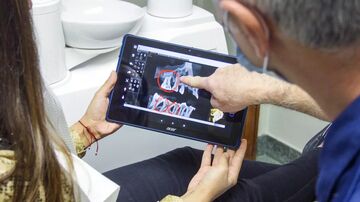
X‑rays all you need to know
X‑rays also known as radiographs, are an essential part of any dental treatment plan. They are used to diagnose and prevent problems.
Use of X‑rays
X‑rays are able to detect decay under fillings or between teeth in areas that are not visible to the naked eye, as well as showing abscesses and infections in the roots of teeth. They also enable the dentist to determine the level and health of bone present in your jaw.
In children, x‑rays can show where their adult teeth will erupt or in adults can show where wisdom teeth are.
New Patients
If you are a new patient, unless you have had x‑rays very recently, the dentist will recommend that x‑rays are taken. This helps to assess the condition of your mouth and check for any hidden problems.
After these x‑rays are recommended every 9 to 24 months depending on various dental risk factors, including history of decay, age and condition of your mouth.
What types of X‑Rays are used?
There are various types of x‑ray. Some show one or two teeth and their roots, while others can take pictures of several teeth at once.
Periapical
Provides a view of the entire tooth, from the crown to the bone that helps to support the tooth.
Bite-Wing
Offers a visual of both the lower and upper teeth. This type of X‑ray shows the dentist how these teeth touch one another and helps to determine if decay is present between back teeth.
Panoramic
Shows a view of the teeth, jaws, nasal area, sinuses and the joints of the jaw, and is usually taken when a patient may need orthodontic treatment or implant placement.
Occlusal
Offers a clear view of the floor of the mouth to show the bite of the upper or lower jaw. This kind of X‑ray highlights children’s tooth development to show the baby and adult teeth.
Not all dentists have the facilities to take all types of X‑rays. If you require a specialist x‑ray prior to treatment you may need to be referred to an alternative surgery. This will ensure that you receive the highest possible quality of care.
Are x‑rays dangerous?
The radiation received from a dental x‑ray is incredibly small. With the constant advances in technology and the fact the dentist will only take x‑rays when they are clinically necessary means that the risks from dental x‑rays are very small.
At Leigh Dental Centre, we use digital imaging plates to take any dental x‑rays required.
The main advantage of using digital imaging plates is that you, the Patient receives’ a much lower dose of radiation as the plates are extremely sensitive. The result is instant and can be seen immediately on our monitor in the surgery. This will make discussions about our findings much better as the image is much larger and easier to view than our original x‑rays.
X‑rays and Pregnancy
You should inform the dentist if you know or believe that you may be pregnant prior to any treatment. They will not take x‑rays until after the baby is born, unless they have no other alternatives.
REMEMBER Prevention is better than cure and that is why x‑rays are used.
If you need more information or would like to discuss how dental x‑rays are used during your dental treatment call Leigh Dental Centre, today on 01702 472929 and book a consultation today.
Contact us to make an appointment
Exclusive Offer
Airflow stain removal from our hygienist


How can Botox be used to treat bruxism?
15.11.2023
Replacement for a Missing Tooth
04.11.2023
Time for you perfect smile?
Book your consultation today
When visiting our practice you know you are visiting the dental professionals trained to the highest standards. You are greeted by our welcoming staff, who share the same aim, to make your visit with us as comfortable and stress free as possible.